A review of Superman Returns
The day before I saw this movie I managed to catch a Discovery Channel special called The Science of Superman. In it various physicists and materials scientists discussed Superman’s abilities as if he were a real person. The directors and writers for the movie (who all looked about fifteen years old) also appeared to brag about how “realistic” they had made the film – they lavished special gratification on their research for a scene in which Superman rescues a commercial jet. “We actually got the stress test data for the wing of a 777,” the director warbled, cutting right to the quick of what makes a good movie: accurate stress and tension characteristics faithful to the specs of real-world airframes.
I still had a little hope for the movie thanks to Kevin Spacey and (especially) Parker Posey, but unsurprisingly the director sidelines Spacey’s surprisingly nuanced jailbird fop Lex Luthor and Posey’s delightful re-cap of her signature drunk-n-crazy character. He focuses instead on Bland Turgidson, the new Superman, and pretty girl/occasional actress Kate Bosworth. He also, for reasons which I pray came from focus groups in Wisconsin, includes an actual tow-headed moppet who performs, on seemingly innumerable occasions, Chopsticks.
If the boring characters and bad acting have not warned you off, consider yourself on notice for the bombastic direction, oleaginous plot, and stale cinematography. The film continually congratulates itself for referencing old, better Superman movies and the comic books. Not the point of a sequel/adaptation. The last hour of the movie is one hideous cacodemonic roar of explosions and disasters; the first two hours suffer calamity equal in import but lesser in noise. Superman is, by custom, a hard character to deepen: he’s basically a nice guy with none of the daddy issues of Batman or the psychotic rages of the Hulk, but this putrid film doesn’t even try. Awful beyond even the reach of humor (tMa and I kept up the wisecracks for about the first hour and a half, but then succumbed to an intense fatigue and depression).
Friday, June 30, 2006

Wednesday, June 28, 2006
Christmas Ape goes to Summer Camp
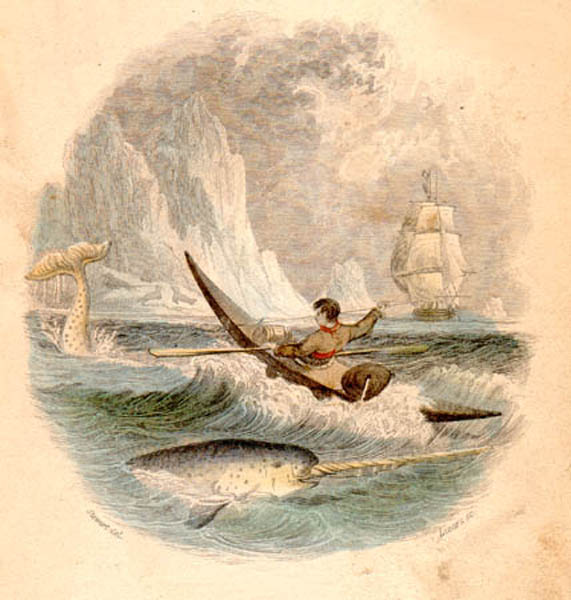
As most (or "both") of my readers may already know, my short story "The Narwhal" has been accepted for publication in the new San Francisco-based literary magazine Beeswax. I stumbled across Beeswax, and its call for submissions, through Chris Onstad's Achewood, a webcomic which most (or "both") of you know I admire. It's a very interesting, very new magazine, and the publishers have experience in printmaking, which resulted in a first issue which reflected an attention to detail usually manifested in the devotional works of anchorites, an especially impressive feat given that it contained both prose and graphic art. The second issue is on pre-order for $5, and I urge each and every one (or "both") of you to secure a copy for yourself. Leaving it casually on the coffee table will guarantee the success of any romantic assignation that you schedule, at least if you schedule it near the coffee table.
POSTSCRIPT: Some ("none") of you may have read my microfiction "The Narwhal" in the Nassau Literary Review of 2003; although this story shares the same basic plot and characters as the piece published in Beeswax, it's about one-eighth as long and does NOT feature the protagonist's fraught and tender relationship with his father. It is closer to the very old original microfiction, an email written at four in the morning in which Tower factotum Tim Skerpon forcefully couples with a narwhal. If you're out there reading this, Tim, you probably don't even vaguely remember who I am or understand why I would want to write fanfiction in which you outrage an endagered sea mammal. I'm not sure if I understand it any more either.
Wednesday, June 14, 2006
Fixin' Towards a Bloody Outcome
Motor Trend
For those of you who have been following my car trouble saga (and I know very well that there are none of you), they appear to have finally fixed the Jetta. Tomorrow I face the melancholy prospect of returning the lavender Kia Spectra loaner, a car that has fixed for itself a wide and spacious place in my heart, and has made itself indispensable both for trips to the video game store and in the purpose of pulling in major babes.
The Omen
Dreary, overlong remakes seem to be the highest new star in Hollywood’s firmament. There are a few good points: Julia Stiles has just the right mixture of cheekbones and upper-class entitlement to play Damien’s disaffected mother, and the fact that she tries to deal with her son’s literally Satanic evil by seeking therapy is the movie’s only interesting point. Stiles gets about half an hour of screen time, spending most of it in WASPy catatonia, failing to enjoy her colossal British mansion and focusing on her own (legitimate) misery. So much for the good. The director inexplicably gives most of the rest of the film to Liev Schrieber (AKA Liv Tyler), a dour flounder of a man who has practically no face at all. Schrieber reacts to his wife’s death and the, again literal, revelation that his son is the Devil with the level of irritation you would expect from a business traveler who has been bumped off the concierge floor. Pete Posthelwaite appears as himself yet again, and a bearded man plays a photographer who apparently also does some freelance crime scene investigation. Honestly, the movie was so 3 out of 5 mediocre that I can barely write anything about it. If you didn’t get enough scary bible-themed conspiracy from The Da Vinci Code, by all means see The Omen.
Veronica Mars Update Watch 2K6
The first season of Veronica Mars was totally sublime, but was so television-y that it can only be described as a chimera of other shows: Twin Peaks plus The O.C. with, as the box copy says, a dash of Buffy. Charming, funny, and with a full-season plot so convoluted that it would fill almost a quarter episode of The Wire. Thoroughly worthwhile.
Deadwood season premiere
Since it generally takes me four to five viewings to make sense of any given episode, I’ll confine myself to remarking that it looks just about as good as always, and seeing Bullock and Swearengen come together against Hearst is going to be amazing. The New York Times recently reported that HBO has killed the show after this season, which is disappointing but perhaps timely, since Deadwood’s vertiginous forward motion is one of its signal virtues, and nothing can kill original plot like a few unnecessary seasons.
For those of you who have been following my car trouble saga (and I know very well that there are none of you), they appear to have finally fixed the Jetta. Tomorrow I face the melancholy prospect of returning the lavender Kia Spectra loaner, a car that has fixed for itself a wide and spacious place in my heart, and has made itself indispensable both for trips to the video game store and in the purpose of pulling in major babes.
The Omen
Dreary, overlong remakes seem to be the highest new star in Hollywood’s firmament. There are a few good points: Julia Stiles has just the right mixture of cheekbones and upper-class entitlement to play Damien’s disaffected mother, and the fact that she tries to deal with her son’s literally Satanic evil by seeking therapy is the movie’s only interesting point. Stiles gets about half an hour of screen time, spending most of it in WASPy catatonia, failing to enjoy her colossal British mansion and focusing on her own (legitimate) misery. So much for the good. The director inexplicably gives most of the rest of the film to Liev Schrieber (AKA Liv Tyler), a dour flounder of a man who has practically no face at all. Schrieber reacts to his wife’s death and the, again literal, revelation that his son is the Devil with the level of irritation you would expect from a business traveler who has been bumped off the concierge floor. Pete Posthelwaite appears as himself yet again, and a bearded man plays a photographer who apparently also does some freelance crime scene investigation. Honestly, the movie was so 3 out of 5 mediocre that I can barely write anything about it. If you didn’t get enough scary bible-themed conspiracy from The Da Vinci Code, by all means see The Omen.
Veronica Mars Update Watch 2K6
The first season of Veronica Mars was totally sublime, but was so television-y that it can only be described as a chimera of other shows: Twin Peaks plus The O.C. with, as the box copy says, a dash of Buffy. Charming, funny, and with a full-season plot so convoluted that it would fill almost a quarter episode of The Wire. Thoroughly worthwhile.
Deadwood season premiere
Since it generally takes me four to five viewings to make sense of any given episode, I’ll confine myself to remarking that it looks just about as good as always, and seeing Bullock and Swearengen come together against Hearst is going to be amazing. The New York Times recently reported that HBO has killed the show after this season, which is disappointing but perhaps timely, since Deadwood’s vertiginous forward motion is one of its signal virtues, and nothing can kill original plot like a few unnecessary seasons.
Thursday, June 01, 2006
Killer Cars + Capsule Reviews

Well, let's see. On my way back from Princeton last Tuesday some witches hexed my brand new VW Jetta turbodiesel, souring all the milk I had in the trunk and causing the car to start driving itself, speeding up a slowing down with great and terrifying whimsy. I got to spend a fun couple of hours waiting on the shoulder of I-87, reading Suttree and looking up every 0.01 seconds to see if the tow truck had arrived. Now I have the ultimate Volkswagen loaner car: a 2002 Volvo S-40. We'll see if the ol' TDI ever actually returns from the tender mercies of the Wappinger's Fall VW Repertory Automobile Mechanics, who have not so much as glanced at it in three days. This is the first car that I have actually leased and paid for entirely on my own, so it breaks my little heart to see it brung so low.
ALSO, see this post by tMa, which points out a horrifying truth about the Bush adminstration that I hadn't yet heard about and been enraged by.
Also, does anyone watch Veronica Mars? I know that Veronica herself had a wacky guest spot on Deadwood in which she runs afoul of Cy Tolliver, who hits her on the head so hard that she gets brain damage, then has her and her brother killed and fed to pigs. I suppose that kind of thing doesn't happen on Veronica Mars since it's on UPN or something.
SOME REVIEWS
Stick It
Really, this movie was 100% delightful, actually much better than its older clone sibling Bring it On. Star Missy Peregrym (coincidentally, also the name of her LARP character) has some charisma and is legitimately super hot. She also has the over six foot height so much in demand in the world of professional gymnastics. Jeff Bridges, the grizzled coach, puts in exactly the same performance he does in every movie, which is fine, and the supporting cast of weird preteen mutants actually seem like they might really be bizarrely sheltered gymnast types. Not much on plot or character or anything else for the serious, Apollonian viewer, but very fun for those of us who see several movies a week with their sarcastic friend.
X-Men III: Wolverine and the X-Me-Do
This movie gave me exactly what I wanted from it, but would have been improved if Magneto (Ian McKellen) had been more frank about his titanically stupid outfit. Also watch for some girl who can walk through walls and is clearly puttin' the spurs to Anna Paquin's boyfriend, and who spends the entire climactic battle scene looking either stoned or comically disinterested in the Brotherhood of Mutants' ultimate weapon: exploding mid-priced family sedans.
On Demand Crap Roundup
Deuce Bigalow: European Gigolo
Not as good as the original, in case you had not used your detective skills to figure that out. Grosser and less nice - when the she-johns actually have horrible deformities, it's just not funny.
The Incredibles
More like the incredibly overrateds.
Sky High
More like the incredibly good.
King Kong
It was like looking in a living, whimsical mirror whenver Jack Black was on the screen, but after only two hours and forty five minutes it got a little stale.
Conspiracy
If you see one chilling historical drama about the Wannsee conference, origin of the Final Solution, see this one. The best and only, but mostly the best.
Tuesday, May 23, 2006
Oh Draconian Devil! Oh BABA BOOEY! (With a special bonus for lovers of Pete Hegseth)
[Insert "So Dark the Con of Man" variant here], A Review of The Da Vinci Code
The Da Vinci Code is getting ciritcally panned, and has aroused a Christian furor equaled in stupidity only by the fear that Harry Potter would cause the youth of the world to take up devil worship. All this aside, it's quite a fun movie, capably directed and acted, visually pleasant, and not boring despite its considerable length. Tom Hanks is charming as always, Audrey Tatou is not annoying, and Jean Reno (who many of you may remember from his famous role in Genma Onimusha III: Demon Siege, although I hear he has also been in some French films) is delightful and intense. Paul Bettany shines as the lunatic albino monk Silas. His performance was so powerful and nuanced that it has caused me to develop an indelible prejudice against albinos, who I now believe are all murderous ascetics. I didn't even find the movie's plot particularly confusing - it was much less complex than some of the more baroque storylines in Angel, and the characters naturally had to explain what was going on to one another, so the exposition never bogged down. Delightful summer fluff.
Special Bonus: HegsethWatch 2K6
Again Mr. Rafil Bonerston-Smith has favored us with a delightful news item, a report on Guantanamo Bay which features quotes from Princeton war hawk/lesbian icon Pete Hegseth. It is available here if Mr. Bonerston-Smith has not already emailed it to you (this page will attempt to print when you navigate to it, I believe because of the "Hegseth Code"). I once had the pleasure of watching Mr. Hegseth shoot the leader of the campus Democrats with a paintball; Mr. Hegseth moved like some kind of white tiger robot, designed to protect Lex Luthor's gardens.
The Da Vinci Code is getting ciritcally panned, and has aroused a Christian furor equaled in stupidity only by the fear that Harry Potter would cause the youth of the world to take up devil worship. All this aside, it's quite a fun movie, capably directed and acted, visually pleasant, and not boring despite its considerable length. Tom Hanks is charming as always, Audrey Tatou is not annoying, and Jean Reno (who many of you may remember from his famous role in Genma Onimusha III: Demon Siege, although I hear he has also been in some French films) is delightful and intense. Paul Bettany shines as the lunatic albino monk Silas. His performance was so powerful and nuanced that it has caused me to develop an indelible prejudice against albinos, who I now believe are all murderous ascetics. I didn't even find the movie's plot particularly confusing - it was much less complex than some of the more baroque storylines in Angel, and the characters naturally had to explain what was going on to one another, so the exposition never bogged down. Delightful summer fluff.
Special Bonus: HegsethWatch 2K6
Again Mr. Rafil Bonerston-Smith has favored us with a delightful news item, a report on Guantanamo Bay which features quotes from Princeton war hawk/lesbian icon Pete Hegseth. It is available here if Mr. Bonerston-Smith has not already emailed it to you (this page will attempt to print when you navigate to it, I believe because of the "Hegseth Code"). I once had the pleasure of watching Mr. Hegseth shoot the leader of the campus Democrats with a paintball; Mr. Hegseth moved like some kind of white tiger robot, designed to protect Lex Luthor's gardens.
All Your Face are Belong to Us

So I had my fieldwork proposal defense yesterday. This is a charming academic tradition in which the PhD candidate stands on a stool in his underwear and the faculty circle with permanent marker all the parts of his body that they feel are too fat. They then take a polaroid which is placed in a "Burn Book" and kept in the thesis room, on file, for posterity. My project was judged somewhat more harshly than others, so they also compelled me to carry a tiny Dora the Explorer backpack around for the rest of the day. All in all, not an entirely pleasant experience.
Thursday, May 18, 2006
Please Go Away, Ramesh Ponnuru
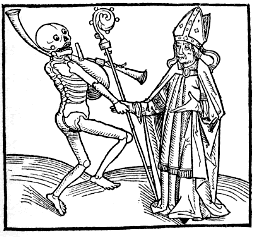
I don’t know how many of you saw Ramesh Ponnuru on the Daily Show yesterday. He was hawking his new book, The Party of Death, one of the endless recent parade of popular nonfiction books on politics. This particular book takes the stance that the Democratic Party is the titular Party of Death, encouraging murder and disrespect for life on a worldwide scale. The fact that Mr. Ponnuru is a senior editor at the National Review should let you know what to expect before even reading his book (and I will freely admit that I have not nor will I ever). Jon Stewart took a pretty hard line with Mr. Ponnuru and was gentleman enough not to point out that Ponnuru is a squeaky-voiced little wiener who has never touched a boobie.
Whether or not Mr. Ponnuru is a wiener has little to do with the argument of his book (though it may have quite a lot to do with the fact that he chooses to make this argument). Basically, abortion is the main issue: Ponnuru sees abortion as being wholly and indelibly defined as a lust for death, a state sanctioned murder, and an erosion of “our fundamental right to life.” Ponnuru claimed on the Daily Show that he advances a principled, ethical, rational argument against abortion that does not rely on Biblical interpretation (what this could possibly be I don’t know, and he didn’t say). He also claimed that he could make the same kind of scientific argument about stem cell research (one wonders if he also opposes blood tests, or surgery). Jon Stewart asked him how the President could justify shedding innocent blood in Iraq to defend us from the (imaginary) weapons of mass destruction while at the same time steadfastly opposing abortion and potentially revolutionary research on stem cells because it represents a sacrifice of innocent life to save other lives. Good question, Mr. Stewart.
Basically, this all boils down to Benveniste and Agamben’s Culture of Life. Mr. Ponnuru calls the democratic party a culture of death and champions a conservative valuing of life as an inalienable, sacred right. Yet when we make life sacred and inalienable, at the same time we absolve the state of any responsibility for its quality. No wonder we do not have national health care yet we enjoy unprecedented tax cuts for the immensely wealthy. No wonder the Bush administration and its conservative and evangelical allies assault sex and science education. This insistence on the sacredness of life cannot emerge from a scientific ethics; my opinion is that the current pusillanimous championing of the rights of the blastula comes from a bottomless hatred and fear of women, and a neurotic, consuming desire to control their reproductive organs. I’m really so, so sick of this. See my previous post for a better explanation of the culture of life idea.
Classic Review Corner
A Review of Krazy Kat the novel
Jay Cantor, 1987
Jay Cantor wrote Krazy Kat in 1987, before Michael Chabon wrote The Amazing Adventures of Kavalier and Clay and before Jonathan Lethem wrote Fortress of Solitude. Krazy Kat contains no superheroes, since Cantor has borrowed most of his characters from Coconino County, home to the titular Kat and setting of the celebrated comic strip Krazy Kat. Drawn by George Herriman, the strip ran in the Hearst newspapers from 1913 to 1944. It little resembled our contemporary comics. The action in Coconino County took place on a full page, and the characters had room to do and say more than, say, Garfield or Beetle Bailey. The core cast was small: Krazy Kat, a natural philosopher and great mispronouncer of words (before Family Circus made the practice nauseating), Ignatz Mouse, who paid no attention to the law or to Krazy, and Offisa Bull Pupp, a bulldog cop who kept the peace in Coconino. Krazy, it so happens, loved Ignatz, and Offisa Bull Pupp loved Krazy; Ignatz, however, did not reciprocate the love of the Kat. He preferred to hurl bricks at Krazy’s head. Krazy took this as a token of affection and Bull Pupp took it as a crime. Many strips ended with Ignatz locked in Coconino’s jailhouse.
Cantor uses Kat & co. as a cast, letting them loose in five vignettes. The technique is academic. We see Cantor’s various themes through the opinions of the Kat, the mouse, and the bulldog: character steps in for theory. His themes too have an academic resonance, and Cantor aims high: he begins with Krazy reacting to the development of the atomic bomb (which coincided with the end of the strip’s press run), passes through Freudian psychoanalysis and revolutionary theory, skewers the culture industy and ends up in an intense consideration of the link between violence and sex. Cantor doesn’t just decorate his novel with these themes: his characters literally live through them, like performance artists. In the section on psychoanalysis, for instance, Ignatz gives a virtuoso reading of Freud by treating Krazy’s neurosis – it’s edutainment and I love it.
Krazy’s neurosis, which she picks up in the first chapter, drives the plot (which scarcely matters because the characters and images are so dazzling). Krazy and Ignatz have been out of work, and Ignatz, always meddling, takes her to see the atomic bomb tests at Alamagordo – after seeing the horror of the bomb Krazy changes; a piece of fallout burns a patch of her perfect black fur white. After this, Ignatz’s bricks begin to hurt, raising stars of pain rather than hearts of foolish love. Coconino County is a plastic place, and Cantor paints its shifting landscape, mesas blurring into clouds and clouds precipitating into cactuses; cartoon Krazy stands still against the backdrop, but after the tests she has to change, she cannot repeat her triangular drama with Ignatz and Bull Pup. No wonder Ignatz reaches for Freud.
So the rest of the book details Krazy’s efforts to become a person, what she calls “round”, as opposed to flat, like a cartoon or movie. Ignatz suggests that sex might be the best route to this, though he has only a hazy idea of what sex is – “I think they pee in each other”, he writes in a letter to Bull Pup. Since Krazy starts out as a full-fledged, interesting character her change works as a classic psychological narrative – she may think of her transformation as change into a new person, the fallout “giving her an inside,” but really she is becoming more herself, emerging rather than transforming.
Despite all its melting landscapes and intense theoretical involvement, Cantor really devotes his novel to character – Kat and mouse both grow and change throughout the narrative, but because they are cartoons Cantor can let them act these internal changes out in arrestingly direct ways. Krazy, for instance, goes rigid after some traumas (Ignatz compares her to “a Danish Modern coffee table”), and Ignatz has a chance to try his crackpot theories, playing psychiatrist, producer, and revolutionary in turn.
Cantor does eventually shift away from the cartoon in the final chapter, “Venus in Furs” (a reference to the classic Velvet Underground paean to S&M), which he originally published on its own in Playboy. Krazy appears here as Catherine Higgs Bosun, patient of Doctor Ignatz and daughter of a prominent physicist – a woman, not a Kat. Ignatz and Kate (The Kat’s new-minted name) waste no time in transgressing the doctor/patient relationship and plunge into a sexually inventive affair. In this final chapter the Kat is no longer strictly speaking a cat, Ignatz no longer a mouse, and Coconino resigns into Boston. We’re definitely still in a cartoon, one that stings and saddens the reader but in places lets the candy colors and startling lines of Herriman’s original vision shine through. Kate and Dr. Ignatz are cartoonish in the manner that most people I know are cartoonish – they fight, mock, and joke ferociously but not in the least unrealistically. When Kate, drunk in some horrible bar and separated from her mouse, leaves Ignatz messages on his answering machine we smile and cringe at the same time, but we never doubt that Kate the Kat would taunt him so: “‘I’m in Paris and I miss you terribly, darling, I wish you were here with me. Why couldn’t you have turned a new leaf over, so your baby could be your slave? Oh Ignatz,’ she snuffled, ‘Why couldn’t you behave?” Ignatz, still a lover of technology, replays the message to search for “French-sounding static.”
Jay Cantor, 1987
Jay Cantor wrote Krazy Kat in 1987, before Michael Chabon wrote The Amazing Adventures of Kavalier and Clay and before Jonathan Lethem wrote Fortress of Solitude. Krazy Kat contains no superheroes, since Cantor has borrowed most of his characters from Coconino County, home to the titular Kat and setting of the celebrated comic strip Krazy Kat. Drawn by George Herriman, the strip ran in the Hearst newspapers from 1913 to 1944. It little resembled our contemporary comics. The action in Coconino County took place on a full page, and the characters had room to do and say more than, say, Garfield or Beetle Bailey. The core cast was small: Krazy Kat, a natural philosopher and great mispronouncer of words (before Family Circus made the practice nauseating), Ignatz Mouse, who paid no attention to the law or to Krazy, and Offisa Bull Pupp, a bulldog cop who kept the peace in Coconino. Krazy, it so happens, loved Ignatz, and Offisa Bull Pupp loved Krazy; Ignatz, however, did not reciprocate the love of the Kat. He preferred to hurl bricks at Krazy’s head. Krazy took this as a token of affection and Bull Pupp took it as a crime. Many strips ended with Ignatz locked in Coconino’s jailhouse.
Cantor uses Kat & co. as a cast, letting them loose in five vignettes. The technique is academic. We see Cantor’s various themes through the opinions of the Kat, the mouse, and the bulldog: character steps in for theory. His themes too have an academic resonance, and Cantor aims high: he begins with Krazy reacting to the development of the atomic bomb (which coincided with the end of the strip’s press run), passes through Freudian psychoanalysis and revolutionary theory, skewers the culture industy and ends up in an intense consideration of the link between violence and sex. Cantor doesn’t just decorate his novel with these themes: his characters literally live through them, like performance artists. In the section on psychoanalysis, for instance, Ignatz gives a virtuoso reading of Freud by treating Krazy’s neurosis – it’s edutainment and I love it.
Krazy’s neurosis, which she picks up in the first chapter, drives the plot (which scarcely matters because the characters and images are so dazzling). Krazy and Ignatz have been out of work, and Ignatz, always meddling, takes her to see the atomic bomb tests at Alamagordo – after seeing the horror of the bomb Krazy changes; a piece of fallout burns a patch of her perfect black fur white. After this, Ignatz’s bricks begin to hurt, raising stars of pain rather than hearts of foolish love. Coconino County is a plastic place, and Cantor paints its shifting landscape, mesas blurring into clouds and clouds precipitating into cactuses; cartoon Krazy stands still against the backdrop, but after the tests she has to change, she cannot repeat her triangular drama with Ignatz and Bull Pup. No wonder Ignatz reaches for Freud.
So the rest of the book details Krazy’s efforts to become a person, what she calls “round”, as opposed to flat, like a cartoon or movie. Ignatz suggests that sex might be the best route to this, though he has only a hazy idea of what sex is – “I think they pee in each other”, he writes in a letter to Bull Pup. Since Krazy starts out as a full-fledged, interesting character her change works as a classic psychological narrative – she may think of her transformation as change into a new person, the fallout “giving her an inside,” but really she is becoming more herself, emerging rather than transforming.
Despite all its melting landscapes and intense theoretical involvement, Cantor really devotes his novel to character – Kat and mouse both grow and change throughout the narrative, but because they are cartoons Cantor can let them act these internal changes out in arrestingly direct ways. Krazy, for instance, goes rigid after some traumas (Ignatz compares her to “a Danish Modern coffee table”), and Ignatz has a chance to try his crackpot theories, playing psychiatrist, producer, and revolutionary in turn.
Cantor does eventually shift away from the cartoon in the final chapter, “Venus in Furs” (a reference to the classic Velvet Underground paean to S&M), which he originally published on its own in Playboy. Krazy appears here as Catherine Higgs Bosun, patient of Doctor Ignatz and daughter of a prominent physicist – a woman, not a Kat. Ignatz and Kate (The Kat’s new-minted name) waste no time in transgressing the doctor/patient relationship and plunge into a sexually inventive affair. In this final chapter the Kat is no longer strictly speaking a cat, Ignatz no longer a mouse, and Coconino resigns into Boston. We’re definitely still in a cartoon, one that stings and saddens the reader but in places lets the candy colors and startling lines of Herriman’s original vision shine through. Kate and Dr. Ignatz are cartoonish in the manner that most people I know are cartoonish – they fight, mock, and joke ferociously but not in the least unrealistically. When Kate, drunk in some horrible bar and separated from her mouse, leaves Ignatz messages on his answering machine we smile and cringe at the same time, but we never doubt that Kate the Kat would taunt him so: “‘I’m in Paris and I miss you terribly, darling, I wish you were here with me. Why couldn’t you have turned a new leaf over, so your baby could be your slave? Oh Ignatz,’ she snuffled, ‘Why couldn’t you behave?” Ignatz, still a lover of technology, replays the message to search for “French-sounding static.”
Monday, May 15, 2006
I Wish this Game were Bad, so I could call it God of Bore
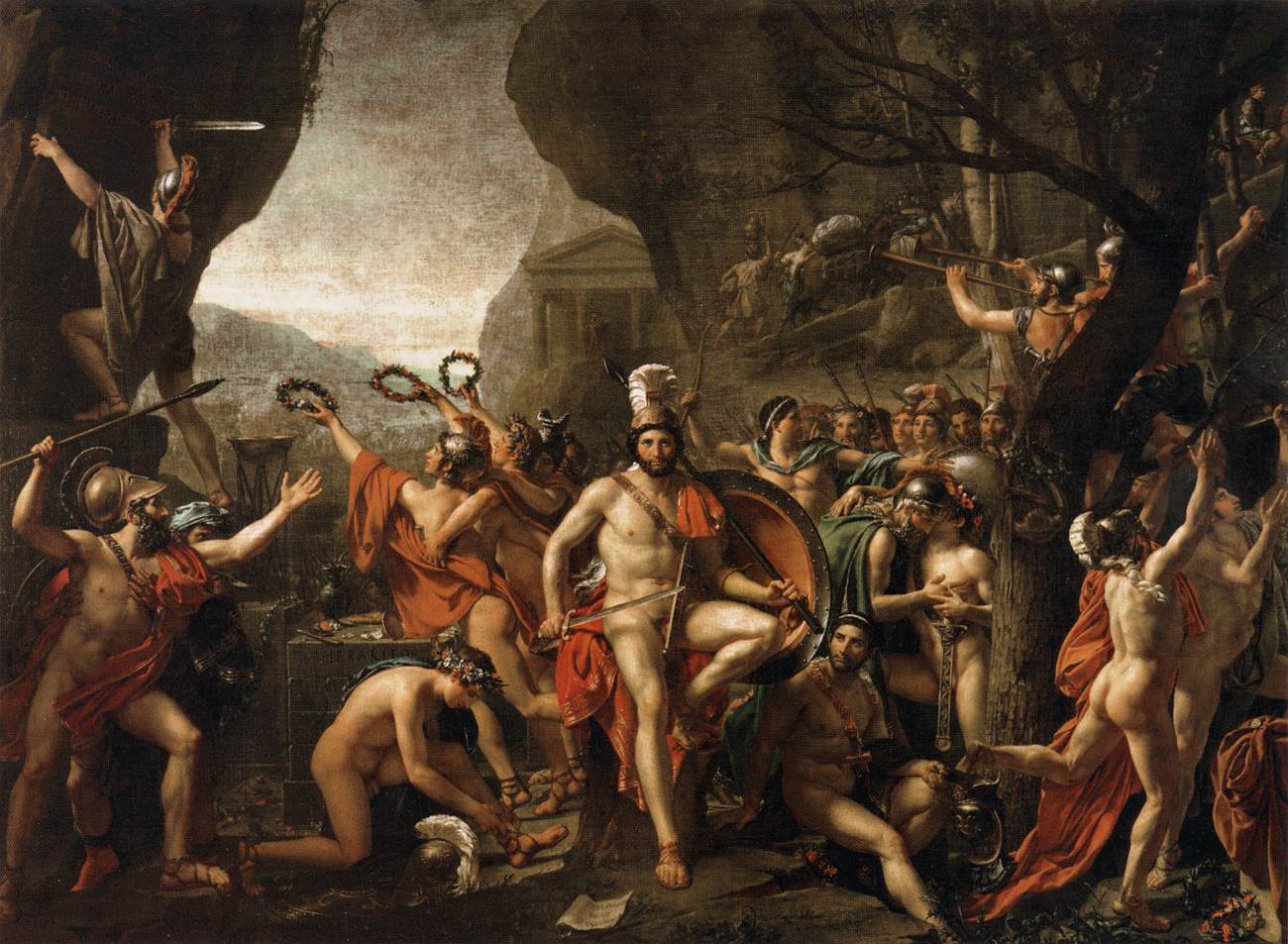
A Review of God of War
Like most people, I bought this game thinking it was the playstation version of the 1998 Brendan Fraser/Sir Ian McKellen vehicle Gods and Monsters. I was looking forward to a robust pool-cleaning sim interspersed with awkward intergenerational gay sex. This turned out to be something of a misconception. God of War is actually about a pale, extremely violent man named Kratos. Kratos sports a gothy pallor, an extreme sports goatee, and a livid red tribal surfer tattoo, yet he clearly could strangle with his muscular legs all of the subcultures which these affectations represent. He would not put up with any come-ons from Sir Ian McKellen either.
Kratos is living out a healthily bastardized version of the Hercules myth, but much like Hercules he is not enjoying most of it. It seems Ares, as Greco-Roman gods do, has made Kratos go nuts and kill his family. Kratos is out for revenge, big-style, and he will stab any number of people or mythological creatures to get it. The plot, a ridiculous pastiche of Greek myth, commits to being grim and nasty and thereby avoids the pitfalls of the singularly boneheaded Japanese video game style of allusion. You don’t have to collect the three Sacred Stones of HyperOlympus, and if some doe-eyed bobblehead suggested to Kratos that by working together and trying their best they could save the environment, Kratos would probably push her off a cliff. Shion from Xenosaga would last about one minute around Kratos. He would not appreciate it if she brought him curry.
Crossover fanfiction aside, this is a very good game. Kratos is a huge bad-ass, as mean and violent and singleminded as a character in a Cormac McCarthy novel, but he also fights his way through the game with a sinuous grace. Once you master the combat system, Kratos’ leaps and dodges become as important as the wide balletic arcs of his blades, and though Kratos may be a contender against Ian McKellan or a tiny, futuristic Japanese robotics engineer, he’s a little outclassed by most of the enemies in God of War. The game has one of the best balancing jobs I have ever seen: you never face a fight that’s impossible or unfair, but you never face an easy opponent either. Most of the monsters Kratos fights are Greek mythological figures given a sinister update: slavering, mad-eyed minotaurs and skull-faced Satyrs both make an appearance, as well as a colossal hydra and a fair number of centaurs who look as if they have wandered off a particularly savage chest-tattoo. Most of these enemies are bigger and stronger than Kratos, and they come at him in swarms, so be prepared for a challenge that may make you yell so loud at the TV that your frighten the dogs. The monsters are not Kratos’ only enemy: one particular challenge in which Kratos climbs giant, rotating bladed cylinders was so difficult that I developed carpal tunnel syndrome so severe that I now have to keep BOTH hands in leather gloves filled with Vaseline.
These hiccups aside, God of War delivers a much better experience than almost any other recent game (Resident Evil 4 rivals it, but suffers from some annoying Japanese video game clichés). The combat is always fun and rewards deep, ethnographic knowledge of the fighting controls (and the blocks and evasions are not simply ornaments!), there are some interesting puzzles, including a violent, ancient Greek version of Tetris, and Kratos manages to take the typical mindless rage of the video game protagonist and turn it into a satisfying character. At one point in the game, Kratos has just completed a ridiculous, enervating, grueling trial in order to obtain Pandora’s Box, which turns out to be the size and weight of a Toyota Scion Xb. He needs to bring the box back to Athens, and he is out in a giant temple in the desert, a temple that took three days climbing up sheer cliffs to reach. Kratos doesn’t even pause before he begins to push the box inch by tortuous inch back to the city. Perhaps the designers realized that actions sometimes can show character much more effectively than dialogue (and certainly better than the RPG stock phrase “…”), and that video games really ought to be relying on action. Eighteen thumbs up – it’s a Player’s Choice or something now too, so it’s only $20.
Sunday, May 14, 2006
AMDB, yeah you know me
A Site Plug, plus a review of Destroy All Humans
Recently, I have been spending a very great deal of time at somethingawful.com (having navigated there from x-entertainment). This site is probably beyond old news to everyone, but they seem to be consistently pretty funny, in a nerdy way, and they also relatively recently added a feature called the Awful Movie Database, a pitch-perfect parody of the IMDB. The idea is not that innovative: they copy the format of IMDB, then fill out the template with fictional movies like Hard Eagle (1993, Steven Segal) and Cannibal Barbarian (1982, Dir. Alan Smithee). The execution is perfect down to the smallest ethnographic details (Cyborg Warp's IMDB message board consists of six or seven posts by "CyborgKnight", all variations on "DVD??????"), but the actual substance of the parodies bears all the hoofmarks of a group of rather clever friends cracking eachother up, and furthermore is just very funny instead of impenetrable and in-joky. Take this triva from Hard Eagle:
Destroy All Humans
If you want an Xbox game under $20, you actually have many, many options, most of which are better than Destroy All Humans. The premise seems like it can't miss: you play a wise-cracking alien in the style of 1950s schlock science fiction, bent on destroying the earth with your death rays and evil plots. The problem is, the developers go for humor with this. The reason that bad sci-fi is funny (much of the time) is that it's NOT played for laughs. But this game is definitely straining the sinews of its digital limbs trying to be wacky. The results brims with all the freshness and verve of Shrek II.
Maybe this would have worked if the jokes were actually funny: hearing an alien (for some reason doing a z-grade Jack Nicholson impression) crowing "It's probin' time!" before painfully electrocuting a kidnapped government agent is not really all that funny, and coupled with the game's extreme violence it embarasses rather than amuses the player. I don't know if they hired a professional writer for the jokes (my money's on "no"), but they are all of the same obvious and dim level. Your alien can (and unfortunately must) scan the minds of the unwitting humans around him, and they are all thinking something stupid that might perhaps seem screamingly funny to a group of foul-smelling men who have developed elaborate tics around their mousing technique. The male citizens of the game make searing assaults on 1950s conformity ("I have to keep up with the Jones! If only I could remember who the Jones were!") and the women think about nothing but sex and their own sex organs ("There's that not-so-fresh feeling again!"). The parentheses contain actual quotes from the game, in case you were wondering. Embarassing.
This would all be OK if the game were good, but it isn't. It's like Grand Theft Auto if your in-game character were a quadraplegic. It gives you very few things to do, and veers maddeningly between soporific ease and unbeatable difficulty. Save your money: only six thumbs up.
Recently, I have been spending a very great deal of time at somethingawful.com (having navigated there from x-entertainment). This site is probably beyond old news to everyone, but they seem to be consistently pretty funny, in a nerdy way, and they also relatively recently added a feature called the Awful Movie Database, a pitch-perfect parody of the IMDB. The idea is not that innovative: they copy the format of IMDB, then fill out the template with fictional movies like Hard Eagle (1993, Steven Segal) and Cannibal Barbarian (1982, Dir. Alan Smithee). The execution is perfect down to the smallest ethnographic details (Cyborg Warp's IMDB message board consists of six or seven posts by "CyborgKnight", all variations on "DVD??????"), but the actual substance of the parodies bears all the hoofmarks of a group of rather clever friends cracking eachother up, and furthermore is just very funny instead of impenetrable and in-joky. Take this triva from Hard Eagle:
Steven Seagal was furious when he learned that over sixty bald eagles were killed during the making of the film. In the director’s commentary track on the 1998 DVD release, Harold Wells explains that “we didn’t tell Seagal we were using real eagles, he would have shit his self. But what the fuck, a real eagle and a permit to be cruel to it costs way less than a really good fake eagle. We must have shot fifty takes of the scene where Geoffrey Lewis beats up that eagle and tears it apart. He kept asking for more takes. He loved it, he loved the feeling of power, I think. Plus we needed to kill about a dozen more eagles for the feathers on all those Indian… you know, those hats. We got really good at killing eagles, between Geoffrey and I. About as good as anyone ever has been, maybe.”Worth a lengthy perusal. SomethingAwful's other sections are also pretty delightful, generally.
Destroy All Humans
If you want an Xbox game under $20, you actually have many, many options, most of which are better than Destroy All Humans. The premise seems like it can't miss: you play a wise-cracking alien in the style of 1950s schlock science fiction, bent on destroying the earth with your death rays and evil plots. The problem is, the developers go for humor with this. The reason that bad sci-fi is funny (much of the time) is that it's NOT played for laughs. But this game is definitely straining the sinews of its digital limbs trying to be wacky. The results brims with all the freshness and verve of Shrek II.
Maybe this would have worked if the jokes were actually funny: hearing an alien (for some reason doing a z-grade Jack Nicholson impression) crowing "It's probin' time!" before painfully electrocuting a kidnapped government agent is not really all that funny, and coupled with the game's extreme violence it embarasses rather than amuses the player. I don't know if they hired a professional writer for the jokes (my money's on "no"), but they are all of the same obvious and dim level. Your alien can (and unfortunately must) scan the minds of the unwitting humans around him, and they are all thinking something stupid that might perhaps seem screamingly funny to a group of foul-smelling men who have developed elaborate tics around their mousing technique. The male citizens of the game make searing assaults on 1950s conformity ("I have to keep up with the Jones! If only I could remember who the Jones were!") and the women think about nothing but sex and their own sex organs ("There's that not-so-fresh feeling again!"). The parentheses contain actual quotes from the game, in case you were wondering. Embarassing.
This would all be OK if the game were good, but it isn't. It's like Grand Theft Auto if your in-game character were a quadraplegic. It gives you very few things to do, and veers maddeningly between soporific ease and unbeatable difficulty. Save your money: only six thumbs up.
Friday, May 12, 2006
Just My Lack

A review of Just My Luck
Starring Lindsay Lohan, Chris Pine, Samaire Armstrong (from Entourage) and some indistinguishable British moppets.
Really, who doesn’t like Lindsay Lohan? From her adequate acting to her basically orange color, Lohan has something for everyone, from the film’s target audience of teenage girls to the balding lone pervert who made this particular cinema experience extra special. Watch it for up-and-coming British “indie” rock band McFly (you can hear their repertoire expand from one to three songs!), an even more twitchy than usual Samaire Armstrong, and a bunch of onscreen animal feces. I give it nine thumbs up. Also, at one point Lohan’s luck gets so bad that she demonstrates an Antigone-like perfect acceptance of the death drive; this places her in the space between life and death, the eerie realm of Das Ding and the Homo sacer, the zone of creation and annihilation populated by monsters and monstrosities. She uses this opportunity to wear bowling shirts and learn to repair fluorescent lighting fixtures.
Saturday, April 29, 2006
As in the Cylinder

Dear everyone,
To graduate does not take a direct object as a verb when used to describe an individual graduating from an institution. "Kimiko graduated college this spring" means one of the following things:
- Kimiko conferred a degree upon college this spring.
- Kimiko gradually changed college by degrees this spring.
- Kimiko arranged or divided college into steps or grades this spring.
I think people find that using graduate as a direct object verb in this way makes them sound smart or British or both (like Sir Ian McLellan), but in fact, to me, it simply sounds affected. Of course everyone will understand you perfectly, and I'm sure that in a few decades this usage will be standard and acceptable, but what is a blog for if not airing completely inconsequential grievances to a largely uninterested public? Here are some grammatically acceptable usages of to graduate.
- Hollywood Upstairs Medical School and Discount Electronics graduates a class of 200 this year.
- Elutherius Abednego Constington was graduated from Harvard in 1810.
- Barring further assault convictions, the university plans to graduate her this spring.
- I graduated from college.
Comments? Objections from Wobblies and Levellers?
Sunday, April 23, 2006
Colossal Review Roundup
Alright BLOGOSPHERE, get ready for a large number of very short reviews culled from this depressing month of April.
Scary Movie 4
If the writers had chosen to parody something other than War of the Worlds and The Grudge (which is a bizarre choice, given that the last Scary Movie parodied The Ring, which you need a scorecard to differentiate from The Grudge), this would have been a much better movie. Anna Faris is charming and very funny, and it would be nice if she had some sharper material to work with. Probably worth seeing on Stars, or if you are already at the mall waiting for a hairdressing appointment.
Silent Hill
Once I played Silent Hill 2 for about fifteen minutes and then got so scared that I literally couldn’t sleep for a week. This was in January of this year. This movie is not that scary, but it is extremely grimy and skin-crawlingly unpleasant. The movie fails to evoke the “oh shit, oh shit!” terror of the games, but does manage to weave together a pretty coherent, kind of interesting plot. Laurie Holden is compelling as freaked-out police officer Sybil Bennet, and Sean Bean is entirely misspent in a secondary role that looks like it was filmed as a response to focus-group viewing of an early draft of the movie. The monsters were somehow less terrifying because you can see them clearly; some of the mystery is eroded, so there’s less room to fill in the gaps with your personal psychosexual horrors.
Game Boy Review Roundup – Normal People Stop Reading
Many of you may know that I recently purchased a game boy advance, or as some like to call it a MicroNanoBoy. I did this so I could play games on the subway or train, and in fact it allows me to achieve this goal. The games, however, are not really all that good. Most people think that the game boy is a system for children, but most of these games would cause a carefree young child to convene a Stuffed Animal War Tribunal and sentence the game boy to being used as a very small skateboard ramp. The games are very, very difficult in the manner of classic Nintendo games like Kid Icarus, games that I mastered to such a low and spastic degree that I rarely made it past the opening credits.
Final Fantasy Tactics Advance
If you are autistic, you will really like this game. Very Japanese, very into punishing you down the road for decisions you make before you really know what you’re doing. I played it for many hours a day for about three weeks then got disgusted and quit. The graphics were charming but the whole experience felt somehow antiquated. The class-switching system is fun, the Laws system is definitely not fun. I liked the equipment management system. I did not like having some of my best soldiers look like deformed rabbits.
Castlevania: Aria of Sorrow
Very good. Too short, a little bit too difficult, but all in all a dreamboat.
Metroid Fusion
Made me want to throw the game boy into a storm drain. It seems like it consists of incredibly hard battles interspersed with fun use of your swell cyber-powers, but it’s actually just the typically annoying video game progression where by the time you get your awesome powers, they are not all that awesome. Why would I want to pay to have my alter-ego repeatedly killed by something that looks like a retarded bat wearing an airport metal detector?
Fire Emblem: The Sacred Stones
This made me want to throw the game boy into some kind of special storm drain that is twice as deep as a normal storm drain. Coupling graphics and inventory management straight out of Ultima Three with a delightful mechanic in which if a character dies, he or she is dead forever, this game was absorbing for about ten hours, then the scales fell from my eyes and I realized that I was replaying the same mission for the ninth time and that I secretly wished that all the characters were dead.
Advance Wars II
Shit sandwich.
Mario and Luigi: Superstar Saga
Since E. Hastings endorsed Paper Mario, I thought this Mario RPG thing might work. Again, this game looks like it might be for children but is in fact better suited to mutant superchildren or baby robots or something. Puzzle minigames: way too hard and annoying. Princess Peach escort mission: abominable. Also, grow some fucking balls, Mario and Luigi! You’re like 40 years old!
Scary Movie 4
If the writers had chosen to parody something other than War of the Worlds and The Grudge (which is a bizarre choice, given that the last Scary Movie parodied The Ring, which you need a scorecard to differentiate from The Grudge), this would have been a much better movie. Anna Faris is charming and very funny, and it would be nice if she had some sharper material to work with. Probably worth seeing on Stars, or if you are already at the mall waiting for a hairdressing appointment.
Silent Hill
Once I played Silent Hill 2 for about fifteen minutes and then got so scared that I literally couldn’t sleep for a week. This was in January of this year. This movie is not that scary, but it is extremely grimy and skin-crawlingly unpleasant. The movie fails to evoke the “oh shit, oh shit!” terror of the games, but does manage to weave together a pretty coherent, kind of interesting plot. Laurie Holden is compelling as freaked-out police officer Sybil Bennet, and Sean Bean is entirely misspent in a secondary role that looks like it was filmed as a response to focus-group viewing of an early draft of the movie. The monsters were somehow less terrifying because you can see them clearly; some of the mystery is eroded, so there’s less room to fill in the gaps with your personal psychosexual horrors.
Game Boy Review Roundup – Normal People Stop Reading
Many of you may know that I recently purchased a game boy advance, or as some like to call it a MicroNanoBoy. I did this so I could play games on the subway or train, and in fact it allows me to achieve this goal. The games, however, are not really all that good. Most people think that the game boy is a system for children, but most of these games would cause a carefree young child to convene a Stuffed Animal War Tribunal and sentence the game boy to being used as a very small skateboard ramp. The games are very, very difficult in the manner of classic Nintendo games like Kid Icarus, games that I mastered to such a low and spastic degree that I rarely made it past the opening credits.
Final Fantasy Tactics Advance
If you are autistic, you will really like this game. Very Japanese, very into punishing you down the road for decisions you make before you really know what you’re doing. I played it for many hours a day for about three weeks then got disgusted and quit. The graphics were charming but the whole experience felt somehow antiquated. The class-switching system is fun, the Laws system is definitely not fun. I liked the equipment management system. I did not like having some of my best soldiers look like deformed rabbits.
Castlevania: Aria of Sorrow
Very good. Too short, a little bit too difficult, but all in all a dreamboat.
Metroid Fusion
Made me want to throw the game boy into a storm drain. It seems like it consists of incredibly hard battles interspersed with fun use of your swell cyber-powers, but it’s actually just the typically annoying video game progression where by the time you get your awesome powers, they are not all that awesome. Why would I want to pay to have my alter-ego repeatedly killed by something that looks like a retarded bat wearing an airport metal detector?
Fire Emblem: The Sacred Stones
This made me want to throw the game boy into some kind of special storm drain that is twice as deep as a normal storm drain. Coupling graphics and inventory management straight out of Ultima Three with a delightful mechanic in which if a character dies, he or she is dead forever, this game was absorbing for about ten hours, then the scales fell from my eyes and I realized that I was replaying the same mission for the ninth time and that I secretly wished that all the characters were dead.
Advance Wars II
Shit sandwich.
Mario and Luigi: Superstar Saga
Since E. Hastings endorsed Paper Mario, I thought this Mario RPG thing might work. Again, this game looks like it might be for children but is in fact better suited to mutant superchildren or baby robots or something. Puzzle minigames: way too hard and annoying. Princess Peach escort mission: abominable. Also, grow some fucking balls, Mario and Luigi! You’re like 40 years old!
Wednesday, April 12, 2006
Heads You Live, Tails you HOLLYWOOD MAGIC!
A Review of Domino
At one point in Domino Tom Waits shows up in the middle of the desert, driving a classic convertible, bandages on his hands and stubble on his long and wolfish face. He tells Keira Knightley, her boss, her violent, sociopathic Latin lover, and their Afghan terrorist RV driver that they must sacrifice their lives to pay for a $300,000 operation for the grand-daughter of a 28 year-old DMV clerk/ Jerry Springer guest named Lateesha. During this scene 90210 alumnus Ian Ziering (playing himself) dances in his underwear, socks covering his hands, babbling hysterically after having drunk coffee larded up with mescaline instead of non-dairy creamer. This is indeed the weirdest scene in the movie, but not by too long a stretch. How could I not love it? I give it nine thumbs up. A. O. Scott recently wrote an article about how there were no great artistic flops produced anymore, that movies were focus-grouped and noted into safe mediocrity. This movie may be neither great nor artistic, but it is definitely not mediocre.
At one point in Domino Tom Waits shows up in the middle of the desert, driving a classic convertible, bandages on his hands and stubble on his long and wolfish face. He tells Keira Knightley, her boss, her violent, sociopathic Latin lover, and their Afghan terrorist RV driver that they must sacrifice their lives to pay for a $300,000 operation for the grand-daughter of a 28 year-old DMV clerk/ Jerry Springer guest named Lateesha. During this scene 90210 alumnus Ian Ziering (playing himself) dances in his underwear, socks covering his hands, babbling hysterically after having drunk coffee larded up with mescaline instead of non-dairy creamer. This is indeed the weirdest scene in the movie, but not by too long a stretch. How could I not love it? I give it nine thumbs up. A. O. Scott recently wrote an article about how there were no great artistic flops produced anymore, that movies were focus-grouped and noted into safe mediocrity. This movie may be neither great nor artistic, but it is definitely not mediocre.
Monday, April 10, 2006
She Blinded me with Very Poorly Conceived Science
Take this delightful test from the Harvard psychology department. Come back when you finish - I'll be waiting right here, in the BLOGOSPHERE!
Ok, basically, this test is supposed to measure your association of certain racial groups with negative ideas, in this case black people with weapons. The researchers claim that this is designed to detect the unconcious roots of racial profiling in almost everyone. In the debriefing page for the test they lament the fact that people who take the test most often associate harmless objects with white people and weapons with black people.
The test works in the following way: you can sort an object or person into one of two categories. it starts off with black on the right and white on the left; then it goes to weapons on the right and harmless objects on the left, then to black OR weapons on the right and white OR harmless on the left. Then it switches categories so that blacks are paired with harmless objects and whites with weapons. My test came back that I had a slight tendency to associate blacks with weapons and whites with harmless objects (cellphones were one of the representative examples, although I don't really think of them as harmless).
Here's the thing: the test measures how many mistakes you made and how swiftly you selected categories. I made many more mistakes in the final category (black and harmless objects versus whites and weapons). Is this because watching American History X in high school turned me into a big ol' racist? NO, it's because I got used to where the categories were on the test! It would be like suddenly having the turn signals on your car reversed: what you associate with them (left and right turns) has no intellectual or decision-making content. You simply know to push the stick down for left and up for right, and if these directions suddenly reverse you're going to make many mistakes. I cannot believe that this actually passes for statistically robust research even in a field as decayed and idiotic as psychology. Even in the dim and badly organized sociology and statistics class I took sophomore year they specifically told us not to design surveys like this, since they cause an egregious bias. The study is so flawed and so unimportant to almost every human being that only the blogosphere can pass judgement on it. The sentence? Death by drowning.
Ok, basically, this test is supposed to measure your association of certain racial groups with negative ideas, in this case black people with weapons. The researchers claim that this is designed to detect the unconcious roots of racial profiling in almost everyone. In the debriefing page for the test they lament the fact that people who take the test most often associate harmless objects with white people and weapons with black people.
The test works in the following way: you can sort an object or person into one of two categories. it starts off with black on the right and white on the left; then it goes to weapons on the right and harmless objects on the left, then to black OR weapons on the right and white OR harmless on the left. Then it switches categories so that blacks are paired with harmless objects and whites with weapons. My test came back that I had a slight tendency to associate blacks with weapons and whites with harmless objects (cellphones were one of the representative examples, although I don't really think of them as harmless).
Here's the thing: the test measures how many mistakes you made and how swiftly you selected categories. I made many more mistakes in the final category (black and harmless objects versus whites and weapons). Is this because watching American History X in high school turned me into a big ol' racist? NO, it's because I got used to where the categories were on the test! It would be like suddenly having the turn signals on your car reversed: what you associate with them (left and right turns) has no intellectual or decision-making content. You simply know to push the stick down for left and up for right, and if these directions suddenly reverse you're going to make many mistakes. I cannot believe that this actually passes for statistically robust research even in a field as decayed and idiotic as psychology. Even in the dim and badly organized sociology and statistics class I took sophomore year they specifically told us not to design surveys like this, since they cause an egregious bias. The study is so flawed and so unimportant to almost every human being that only the blogosphere can pass judgement on it. The sentence? Death by drowning.
Subscribe to:
Posts (Atom)